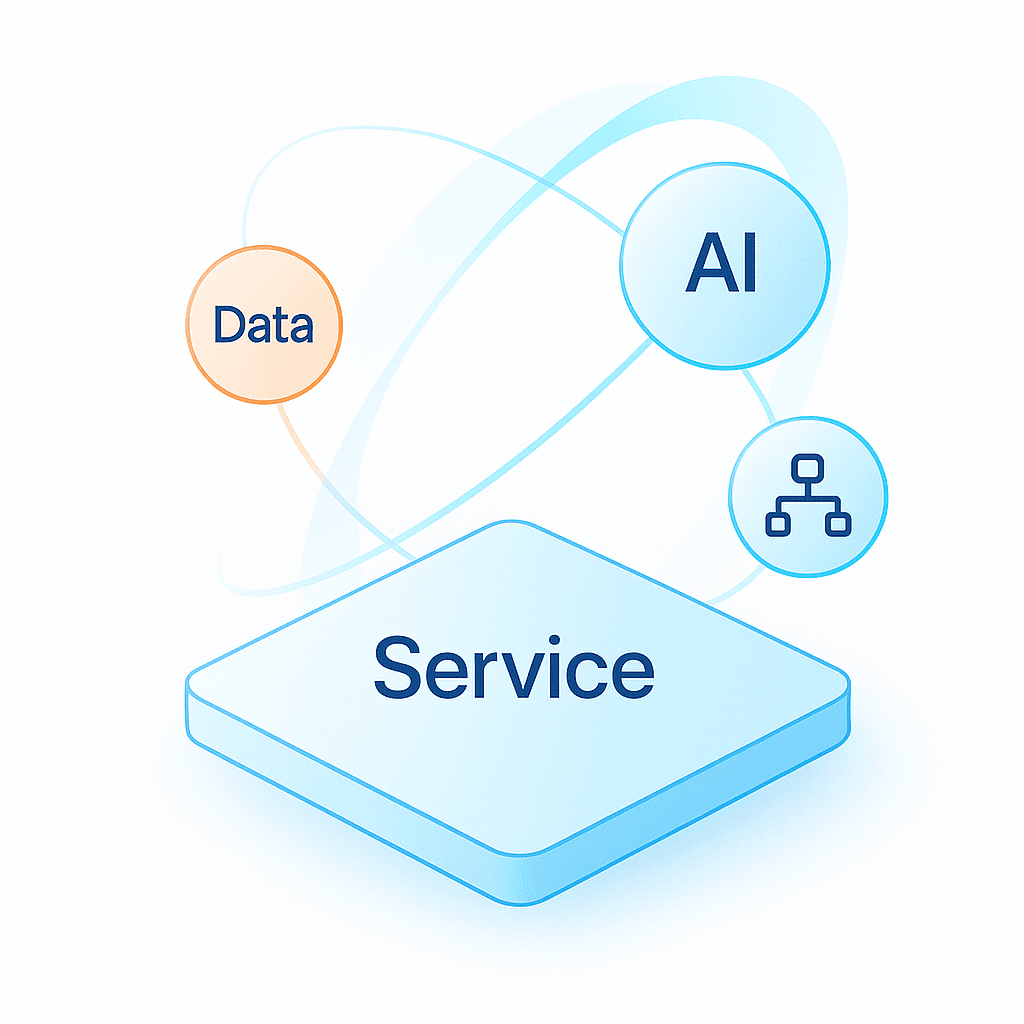
A company's performance no longer depends only on the power of its tools, but on how they interact. In an environment saturated with technology, real value now comes from orchestration, not accumulation. It is this idea that makes Service-as-a-Platform a model for the future. Rather than a succession of applications, it offers a living platform, where data, analysis and artificial intelligence are based on business needs. This model is redefining how businesses design their systems, teams, and even decisions.

The pure SaaS model shows its limits: saturated market, slower growth, more demanding customers. At the same time, AI is paving the way for a new generation of businesses that merge technology and human expertise. This is called Service as a Platform (SaaP). This model no longer sells a tool, but a result. Find out why the most visionary players are adopting this approach, and how it could redefine your business.
.png)
SaaS solutions have become ubiquitous, but with the rise of AI, their role is shifting. Large Language Models and autonomous agents allow businesses to automate tasks, interact directly with data, and create custom tools without relying on predefined software interfaces. This raises the question: is SaaS becoming a mere infrastructure layer for AI-driven applications? To stay relevant, SaaS providers must specialize in specific industry verticals and integrate AI with consulting to ensure structured, high-quality data. The future of SaaS may be less visible, more modular, and fully AI-powered.

.png)





.png)


